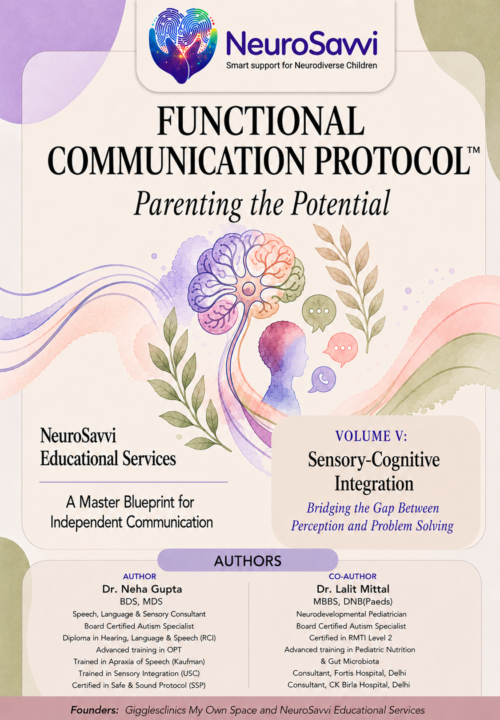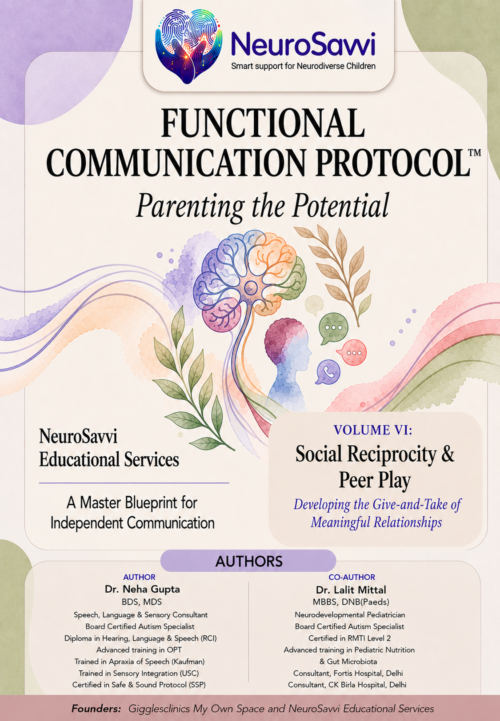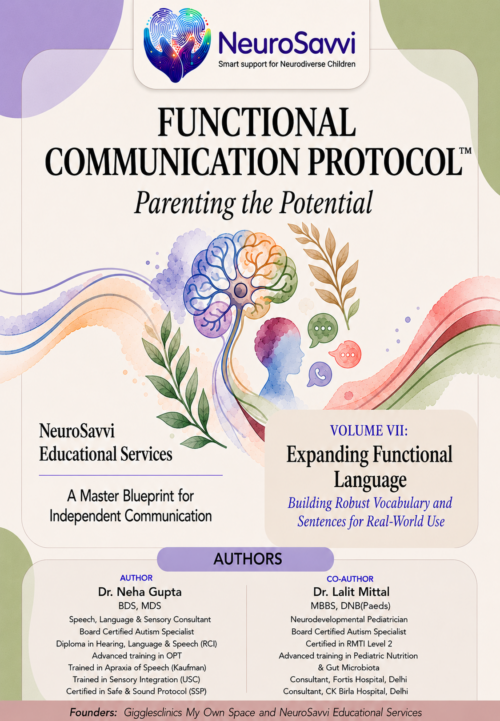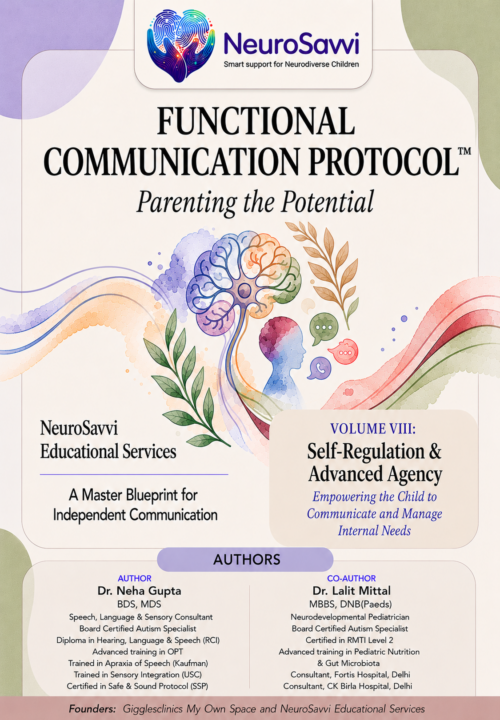
A developmental roadmap for meaningful communication

Help your child communicate when it really matters.

Move beyond random activities and memorised answers. Build communication skills in the right order—so your child can use them with confidence in everyday life.

Find the right volume ↗
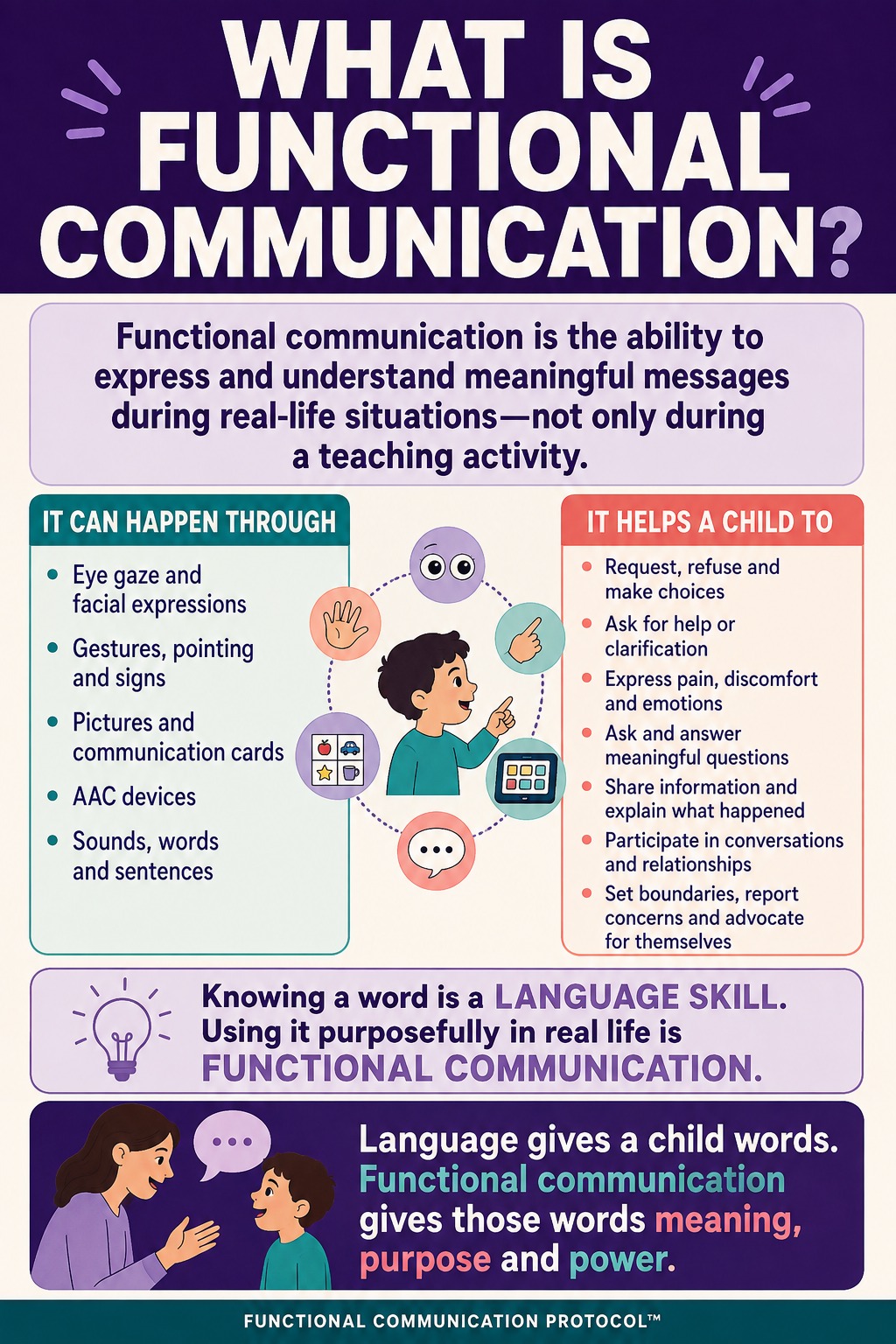
What functional communication means
No more worksheets.   No more guessing.   A clear path forward.

A better way to build communication

From “What should I teach?”
to “I know what comes next.”

Explore the complete FCP journey in developmental sequence.

02

Look beyond fluency

A child can speak—and still struggle to communicate

The signs change with age: distress instead of requesting, memorised answers, difficulty explaining events, social misunderstandings or trouble reporting safety concerns.

Support is based on need, not labels.
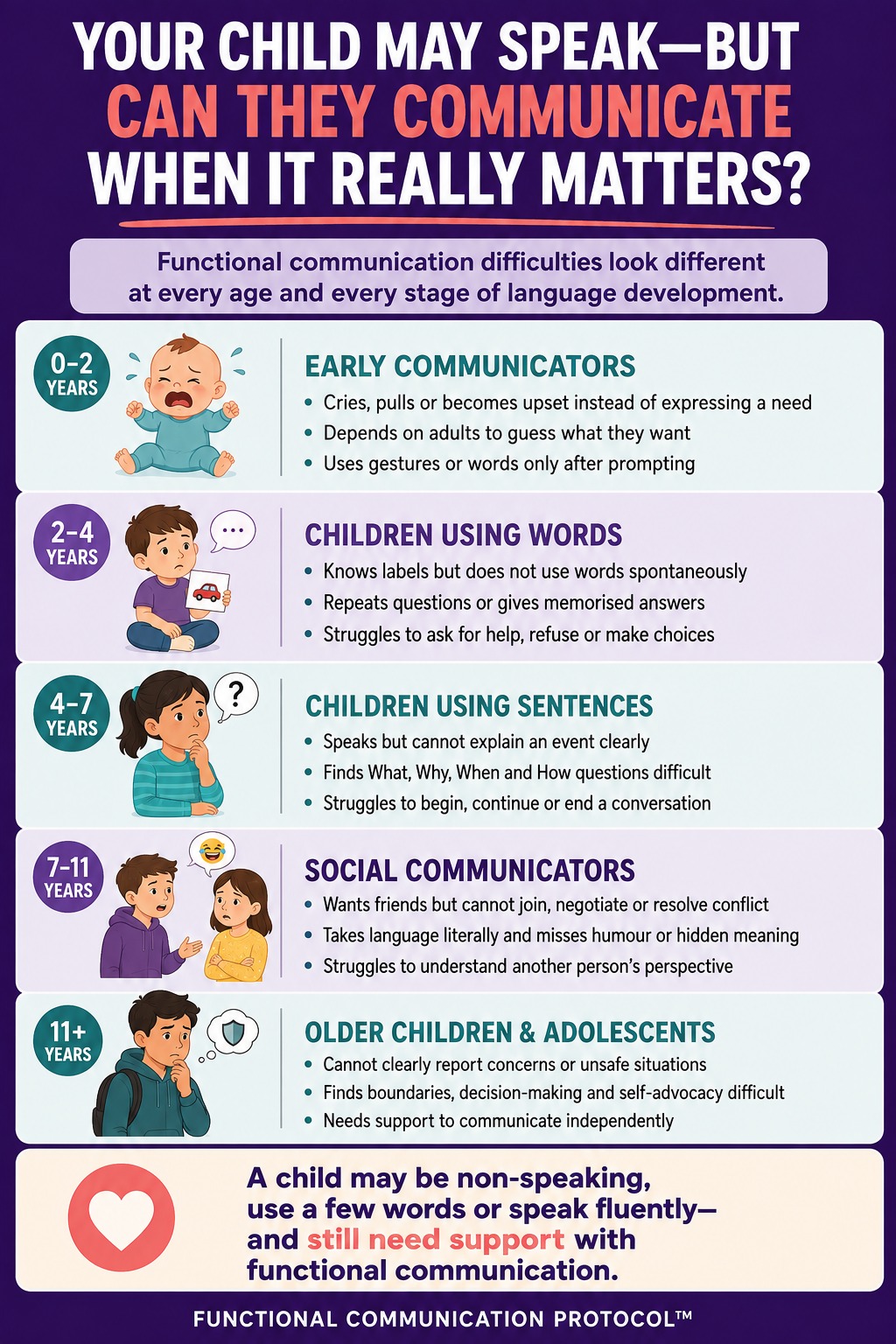
Communication difficulties across ages
03

A pathway for every stage

Not only for children who are non-speaking

FCP supports beginning communicators, children using words, verbal children, children who cannot explain events, children with social difficulties, older children and adolescents.

Start where the child is today.
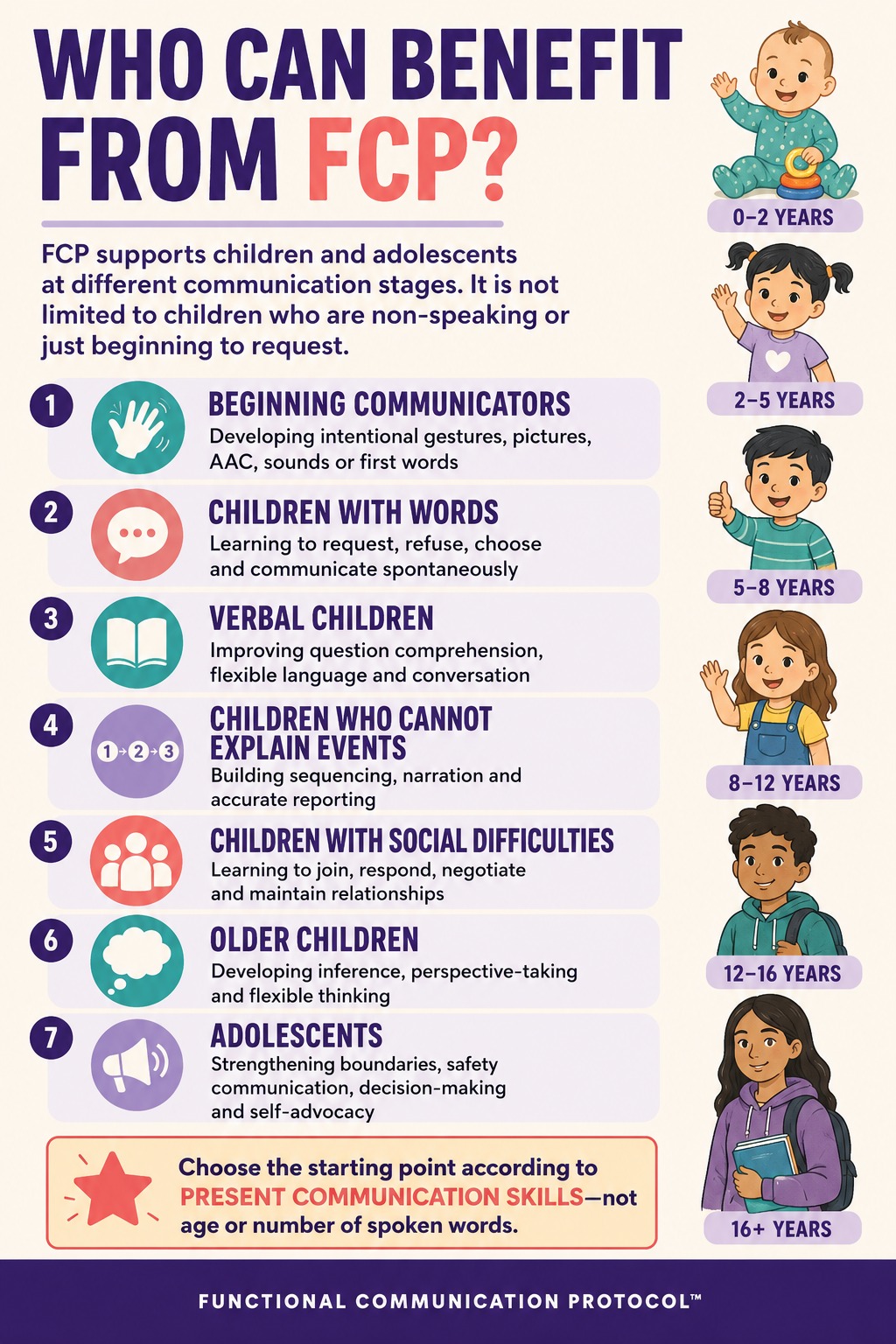
Who can benefit from FCP
04

Replace guesswork with a plan

A structured pathway makes the next step clear

Identify present skills, find the missing foundation, begin at the right level, teach in sequence, practise during everyday routines and generalise across people and places.

Know what to teach now—and next.
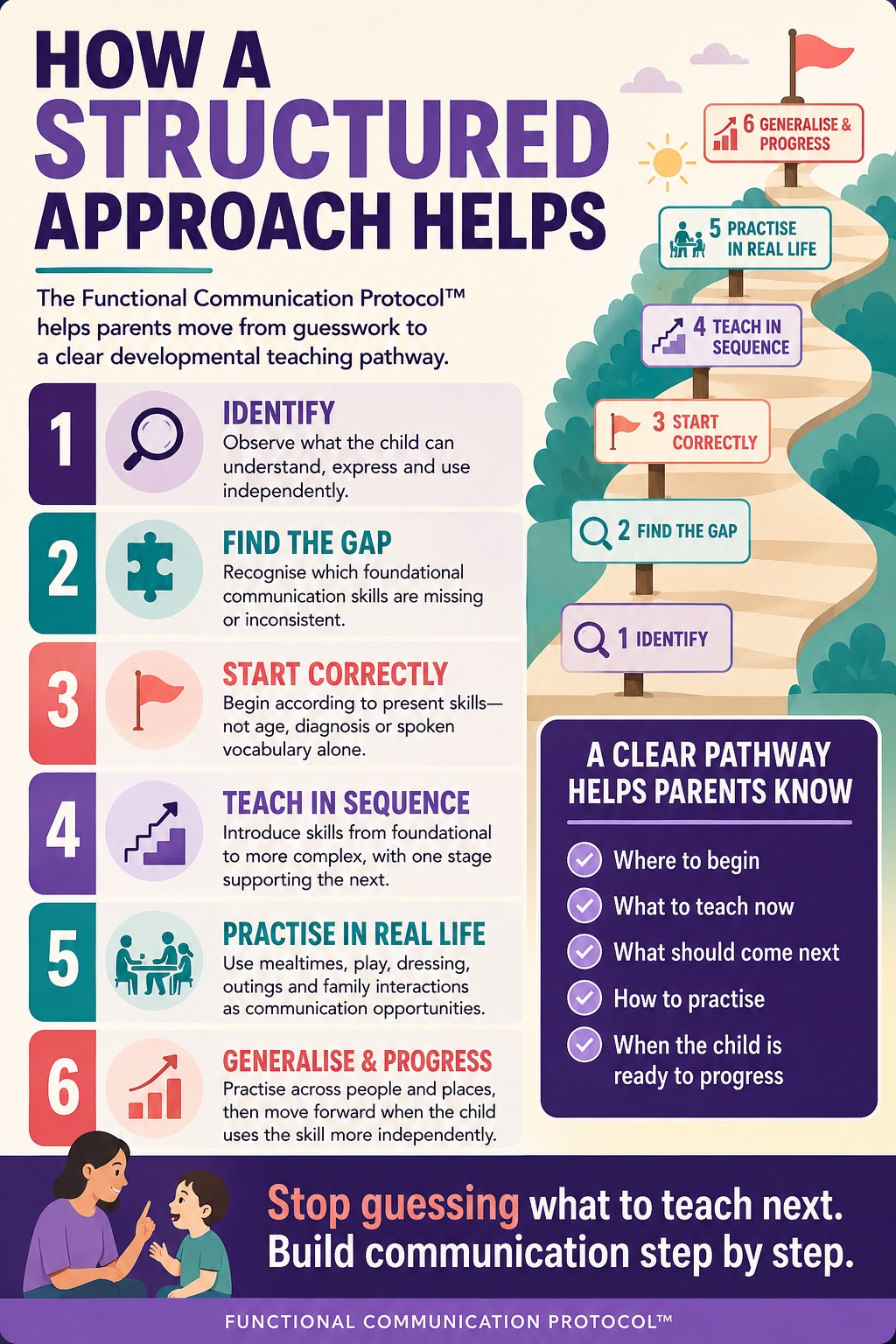
Six-step structured FCP pathway
05

Everything parents need

A complete parent-learning system in every kit

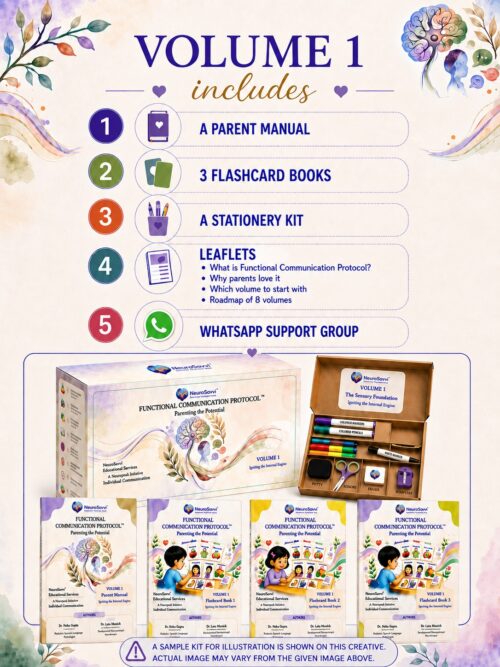
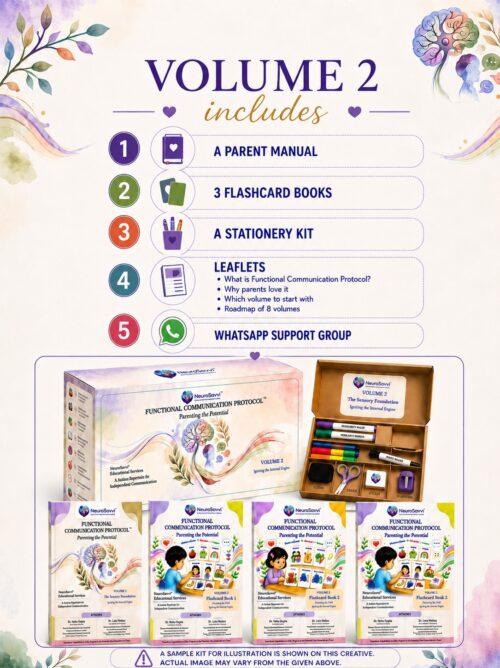
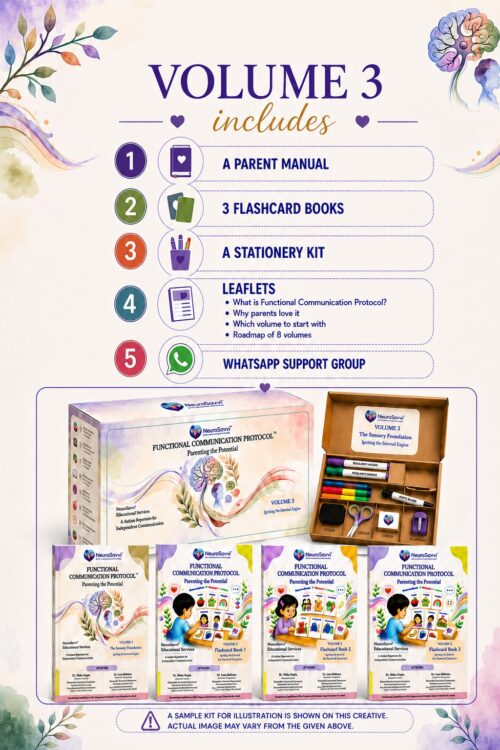
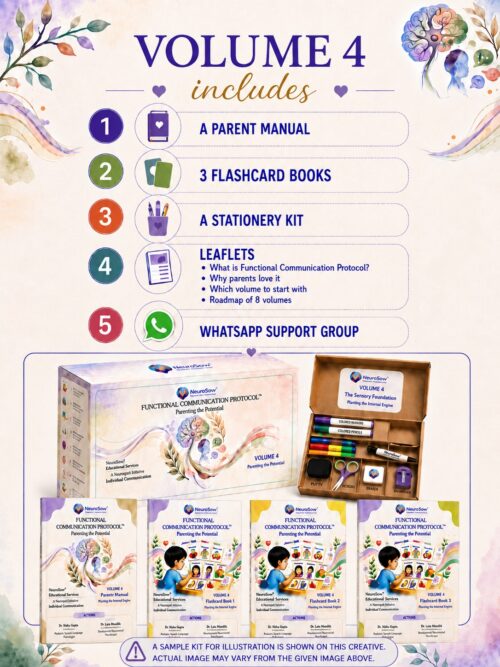
Each volume combines a comprehensive parent manual, three flashcard or picture-card resources, a stationery kit, parent guides, a developmental roadmap and WhatsApp parent support.

Three card books. One clear system.
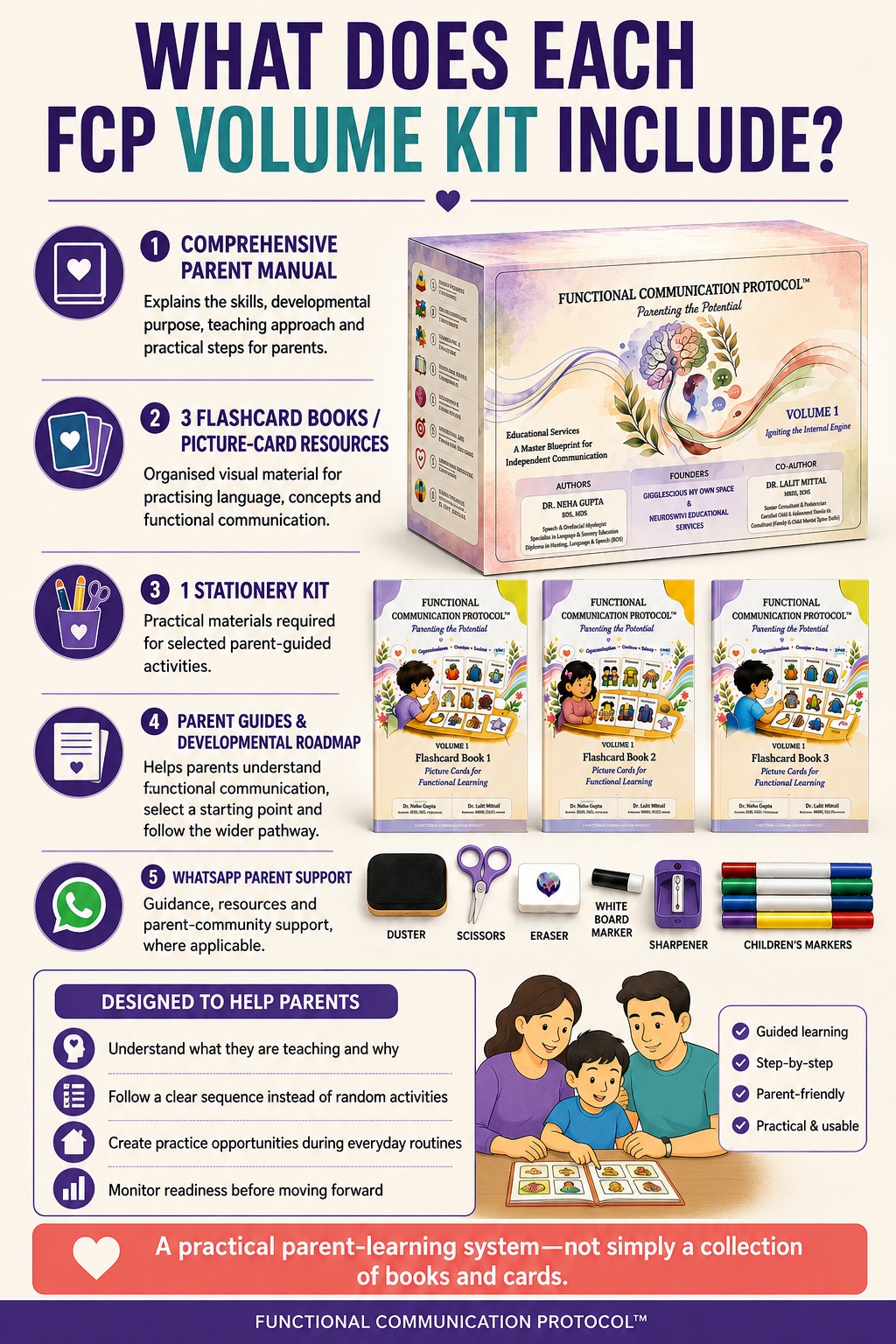
What each FCP kit includes
06

From performance to independence

More words do not always mean more communication

Naming pictures and answering familiar questions can look like progress, yet the child may still be unable to request, explain or express a feeling. FCP carries skills into real life.

Spontaneous, useful communication.
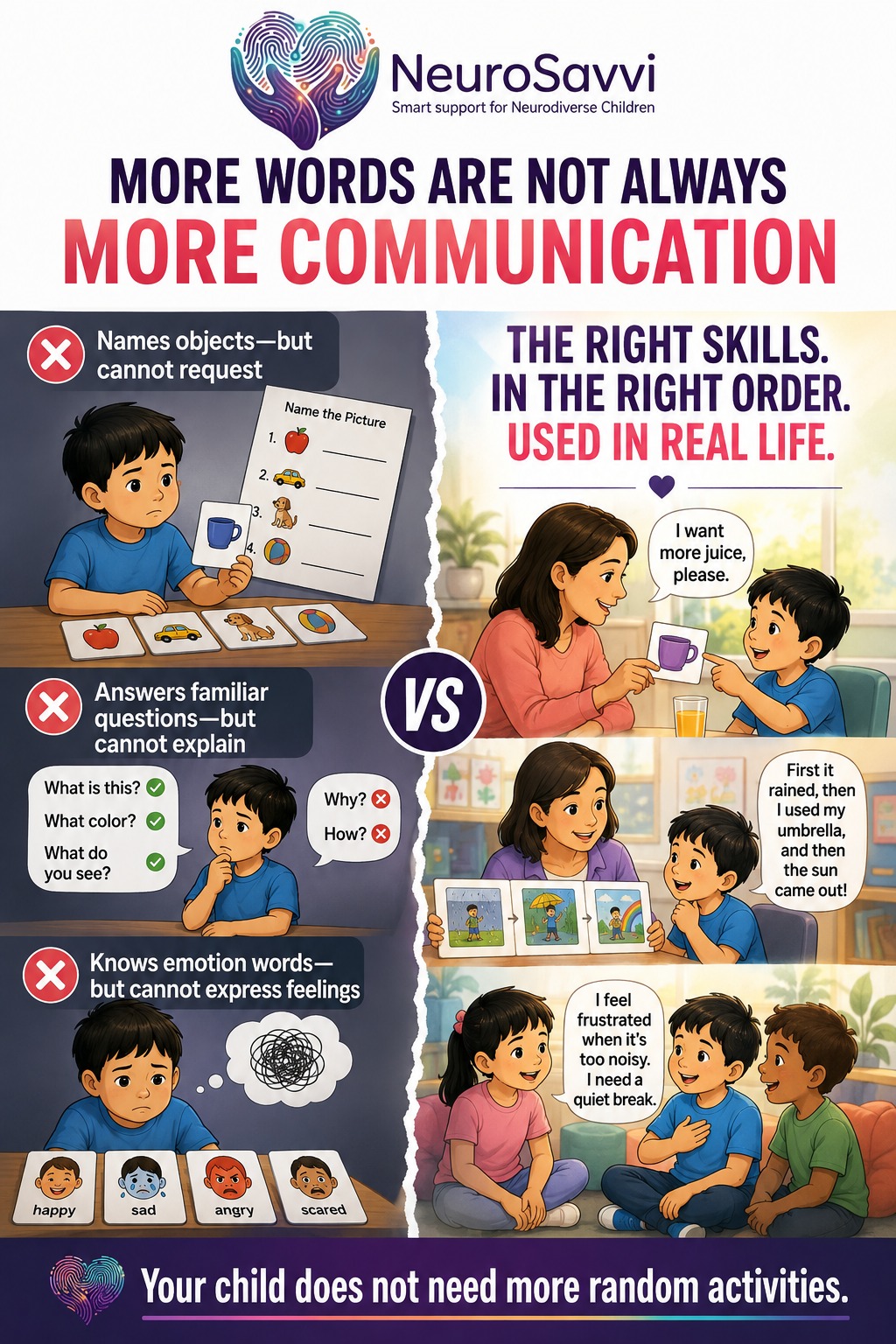
Rote tasks compared with real communication
07

Choose with confidence

Find the volume that matches your child today

The eight-volume roadmap moves from regulation and readiness through intentional communication, language, daily living, reasoning, social interaction, inference and self-advocacy.

A volume revisited is never wasted.
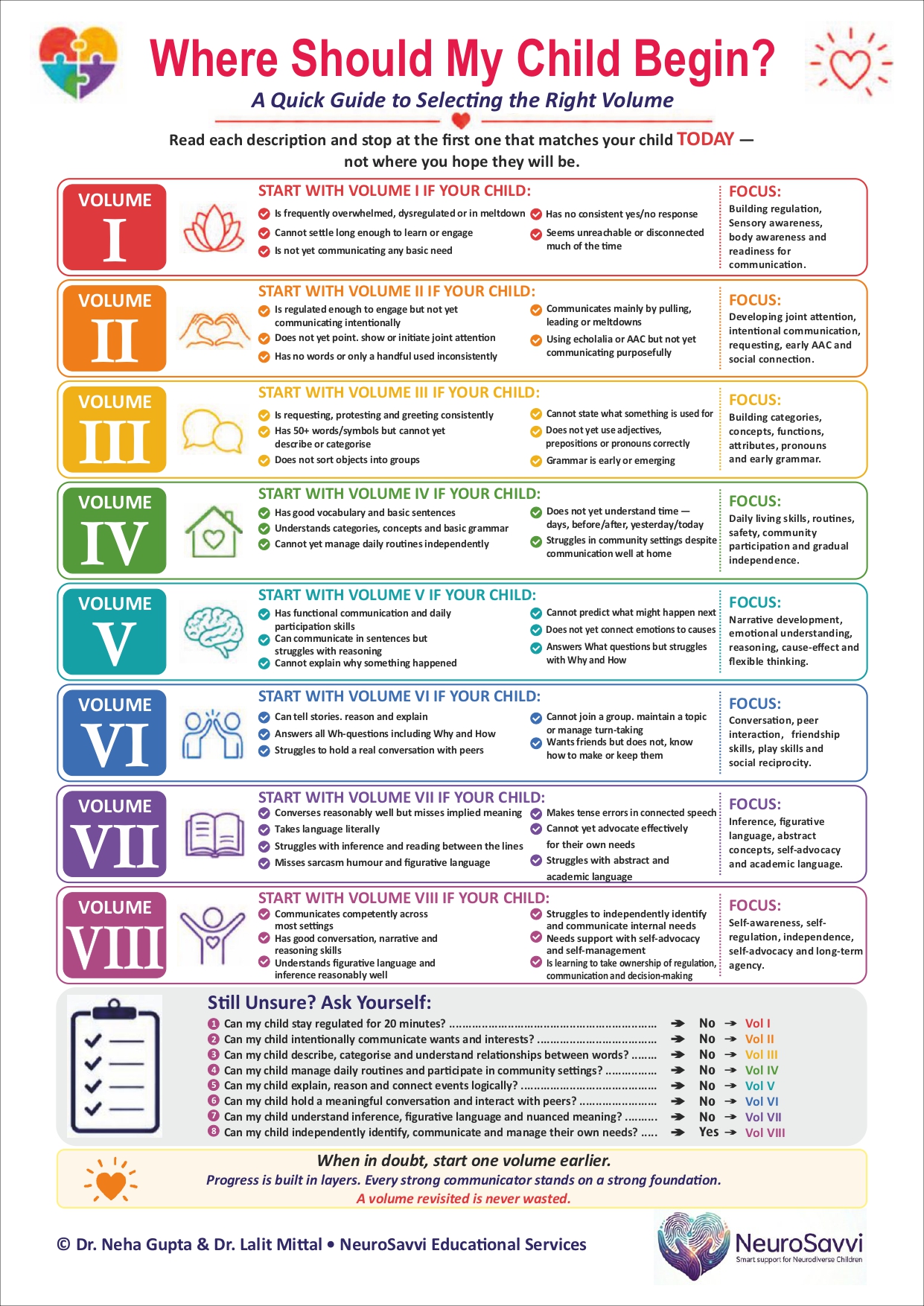
Guide to selecting an FCP volume
08

Build the foundations first

Random activities cannot replace a connected sequence

Progress becomes durable when regulation, shared attention, understanding, intentional communication, flexible expression and social-emotional understanding are built in order.

Right foundation. Right sequence. Real life.
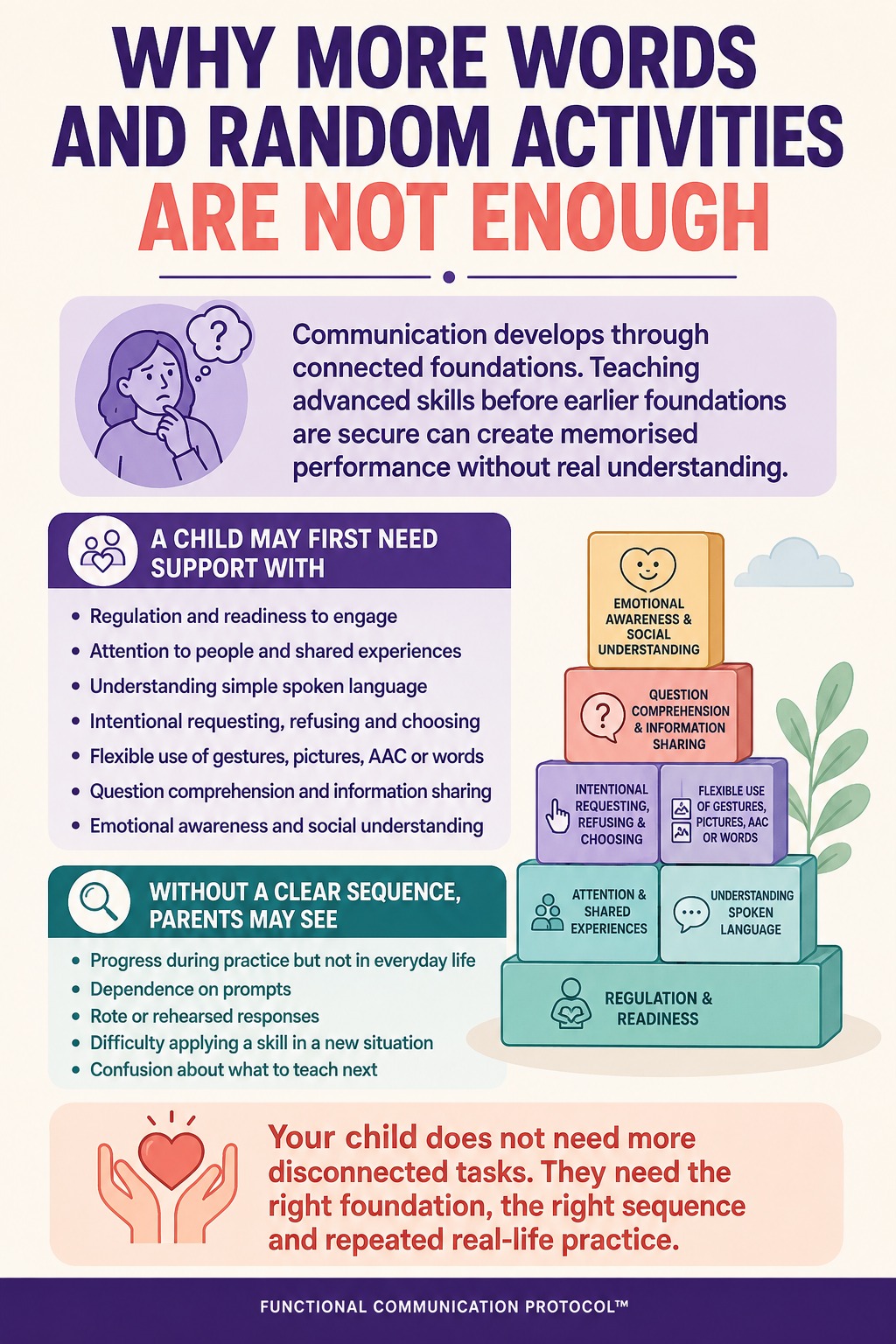
Communication foundations pyramid

Choose your pathway

Start with one volume. Build for a lifetime.

Every kit helps parents understand what to teach, why it matters, how to practise and when to progress.

Message “FCP START” ↗
One volume kit₹7,500Complete parent-learning kit
Any 2 kits₹15,000 14,250Save ₹1,250 • 5%
Any 3 kits₹22,500 ₹20,250Save ₹2,250 • 10%
All 4 available kits₹30,000 ₹24,000Save ₹6,000 • 20% off

Your child’s communication can become clearer

Stop guessing.
Start with the right foundation.

Message us to identify the most appropriate starting volume based on your child’s present communication skills.

Call/ WhatsApp FCP START ↗Call +91 88267 25566 • Pan-India delivery

What Parents Are Saying

Real families, real progress

“For the first time, I knew where to begin.”

We were trying so many things with our child and were completely confused about what to teach first. The Functional Communication Protocol gave us a clear step-by-step direction. It finally felt like we had a roadmap.

— Priya, Parent of a 3-year-old

“It helped me understand what my child was actually communicating.”

My child used to pull my hand or cry whenever he wanted something. The protocol helped me look beyond the behaviour and understand the communication underneath it.

— Ananya, Parent of a 4-year-old

“We stopped chasing words and started building communication.”

My son could say several words and even repeat rhymes, but he couldn’t tell us what he wanted. This programme helped us focus on meaningful communication rather than simply increasing vocabulary.

— Karan, Parent of a 4-year-old

“The activities fit into our everyday life.”

What I loved most was that we didn’t need to create a separate classroom at home. We could practise during meals, playtime, dressing and daily routines.

— Meera, Parent of a 5-year-old

“The flashcards made practice much easier.”

The visual resources made it much easier for me to know what to show, what to say and how to practise with my child. It made home practice much more structured.

— Sanjana, Parent of a 3-year-old

“I finally understood what skill should come next.”

Before this, I was constantly asking myself, ‘What should I teach now?’ The volume structure helped me understand the sequence and prevented me from jumping ahead.

— Arjun, Parent of a 5-year-old

“Communication became more purposeful.”

My daughter knew many words but often used them without a clear purpose. The protocol helped us work towards using communication for requesting, choosing, expressing feelings and participating.

— Divya, Parent of a 4-year-old

“It gave us confidence as parents.”

We often felt helpless because we didn’t know whether we were practising the right things. Having a structured programme made us more confident and consistent at home.

— Nikhil, Parent of a 3-year-old

“It is much more than a book.”

The combination of the parent manual, flashcards, practical materials and guidance makes this feel like a complete communication toolkit rather than just another book.

— Kavita, Parent of a 6-year-old

“We now understand that communication is much bigger than speech.”

The biggest change for me was my understanding. I realised that communication is not just about saying words. It is about expressing needs, feelings, choices, ideas and becoming more independent.

— Rahul, Parent of a 5-year-old
Chat with us