-

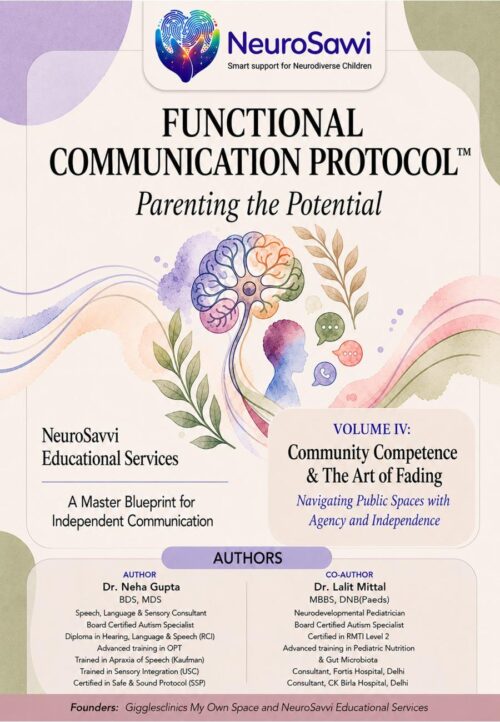
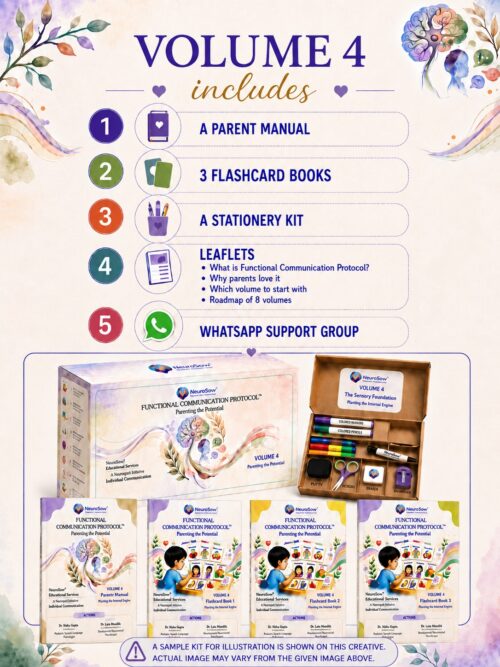
 Volume 4 takes communication into real life. It focuses on survival language, safety, routines, emotional readiness and the ability to participate at home, in school and in the community. Parents learn how to teach functional communication during dressing, meals, hygiene, classroom routines and public situations - while gradually fading prompts so that support does not become permanent dependence.
 -
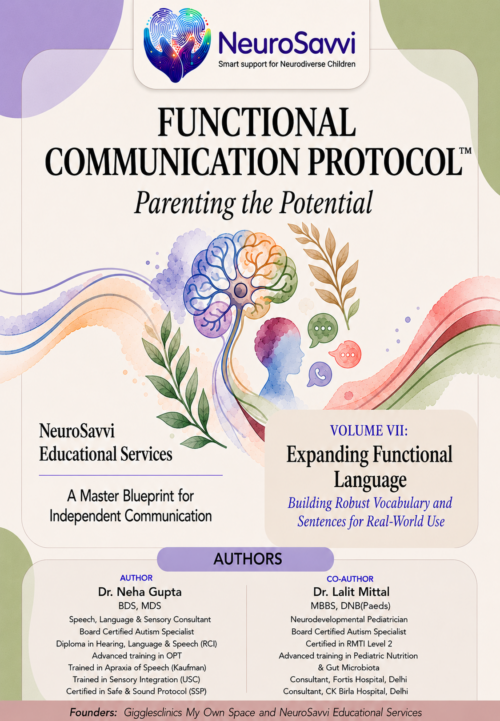
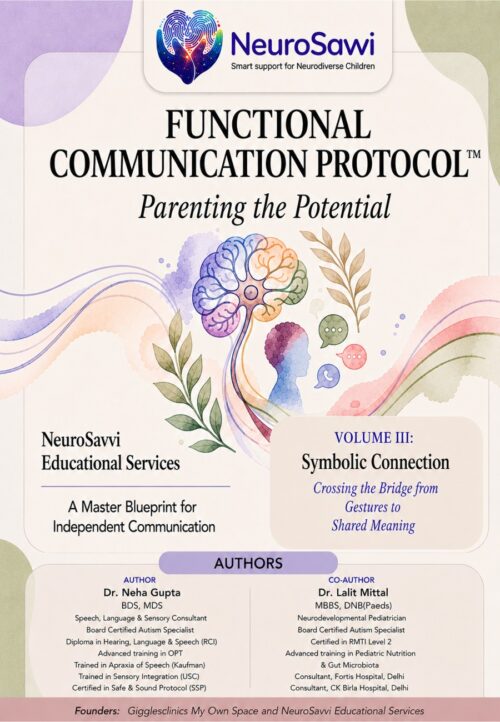
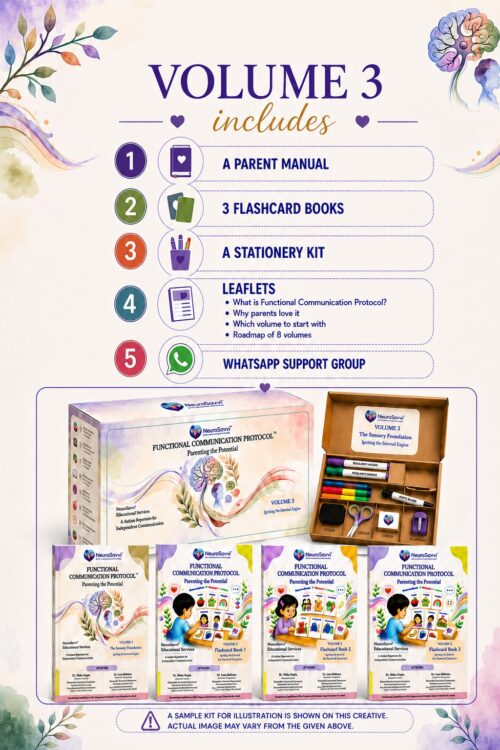
 Volume 3 moves the child from isolated requests and early words toward a connected language system. Parents learn how to build vocabulary that is functional, flexible and meaningful - not simply memorised labels. The volume develops receptive and expressive language, early grammar, sentence combinations, yes/no understanding and sequencing. Everyday moments become opportunities to help the child connect words with people, actions, locations, quantities and relationships.
 -
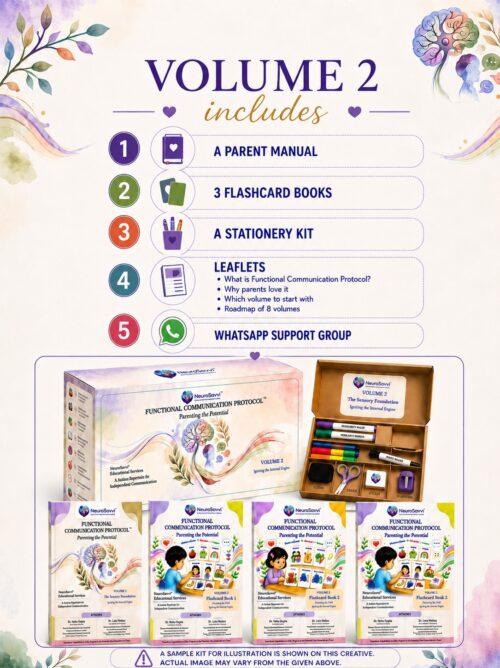
 Volume 2 helps parents transform random actions, body movements and early signals into purposeful communication. It teaches the child that reaching, giving, pointing, gesturing, looking and vocalising can change what happens around them. The volume also strengthens imitation, play, early cause-effect thinking and object understanding. These skills create the bridge from passive responding to intentional participation - the stage at which the child begins to discover, “My voice matters.”
 -
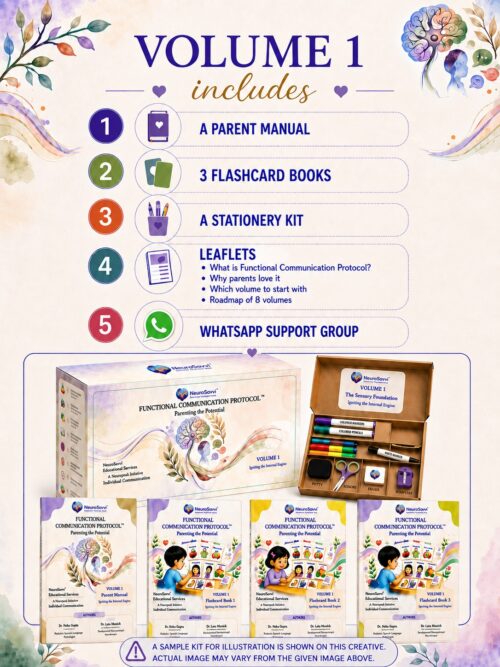
Volume 1 begins before words. It helps parents understand the sensory and attentional systems that make communication possible. The focus is not on forcing speech, but on helping the child feel safe, organised and available for connection. Through practical home routines, parents learn how to recognise sensory overload, co-regulate more effectively, build sustained attention and strengthen the earliest social foundations - response to name, eye-gaze shifting, joint attention and shared affect.